
Altar of territory)
Ficha técnica
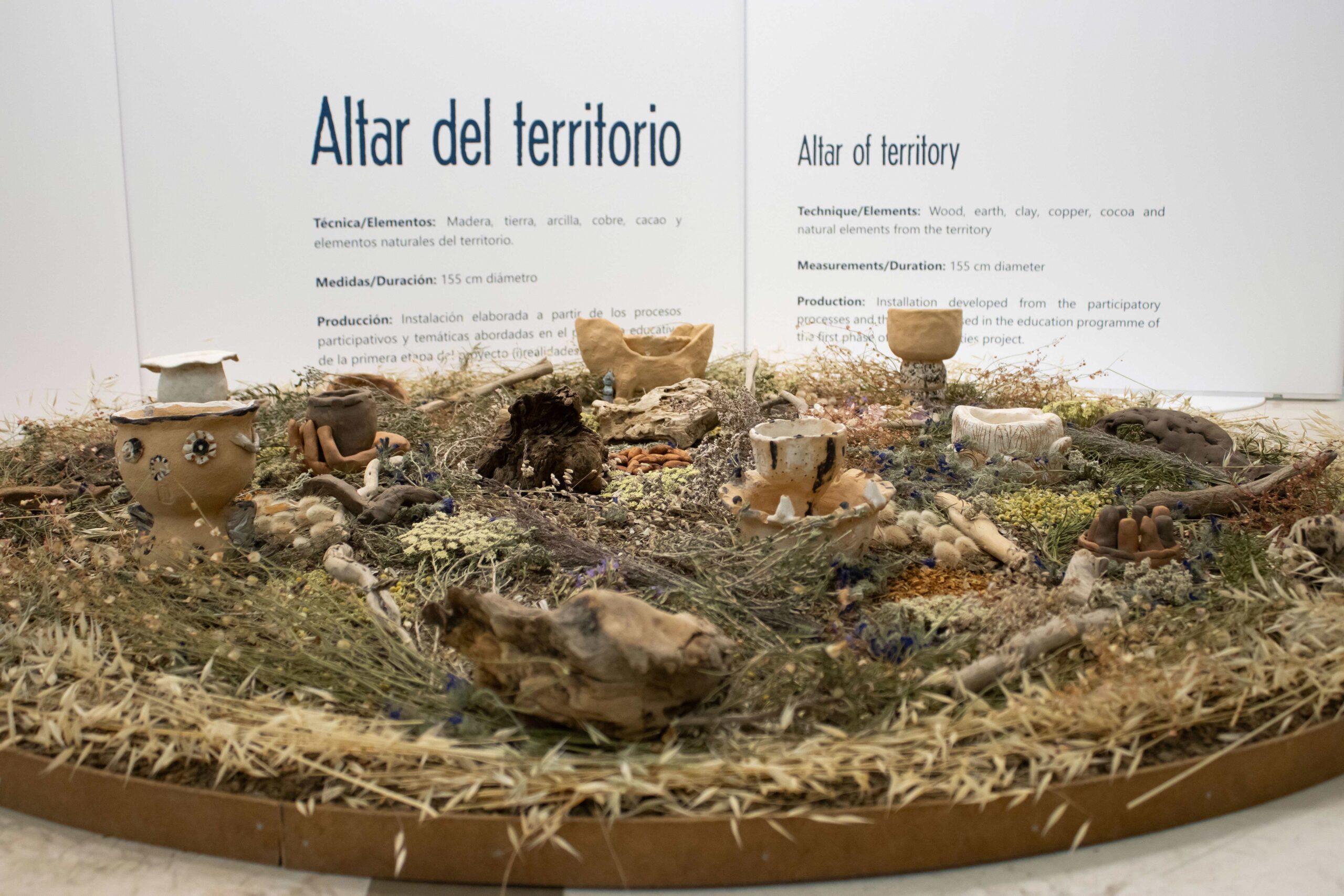
The altar of territory is a symbolic installation that takes shape in a non-physical territory, conceived as a space filled with symbolism and shared collective memory.
Through the use of the circle as a symbol of shared knowledge in Indigenous ancestral traditions, the altar acts as a catalyst to bring back folk and medicinal knowledge that is part of our culture.
Here, ritual is manifested in everyday activities through subtle acts of care and gestures, linking daily life with the sacred.
Finally, the installation invites visitors to experience a conscious perception that moves between the visible and the invisible, appealing to physical sensitivity to activate latent knowledge through direct experience with the material.
The installation is located at the foot of Leónidas Gambartes’ works Serie las yuyeras II, La Morteada and Figura y paisaje. These works depict women working with the land and preparing medicinal plants, in which the idea of including ritual in daily acts of care is also present.
The altar functions alongside a collective herbarium under construction. This has been specifically designed to record and share folk knowledge linked to the history of the territory and to knowledge inherited through oral transmission, passed down from generation to generation; this is also represented in Gambartes’ work.
The pieces resulting from the collective workshops are linked to the altar of territory in physical, thematic and symbolic ways. On one hand, the altar has been constructed using natural elements from the territory – both living and non-living things – along with specific pieces resulting from the workshops and activities with the general public. However, beyond physical references, it pulls together processes of participation by combining objects and themes that were common to all group activities, representing concepts such as rituals, shared memory and creative processes.
A sense of community and shared/collective thinking has been present throughout the programme, including in talking circles and exercises in collective thinking, which went across the workshops and the activities that took place within the project.
From a curatorial perspective, the decision was made not to exhibit the workshop results literally or in isolation; instead, these contributions were transferred to the altar so that, by complementing each other, they would convey a collective and emotional narrative.
This connection gives life to the principle of “audience authorship”, granting people the ability to influence and shape the exhibition by identifying their own experiences, reflections and emotions within the installation, thereby including collective participation without limiting it to the activities and physical objects that were ultimately included.